Ben Stokes: The man who refused to go quietly and then left over tea | Cricket News


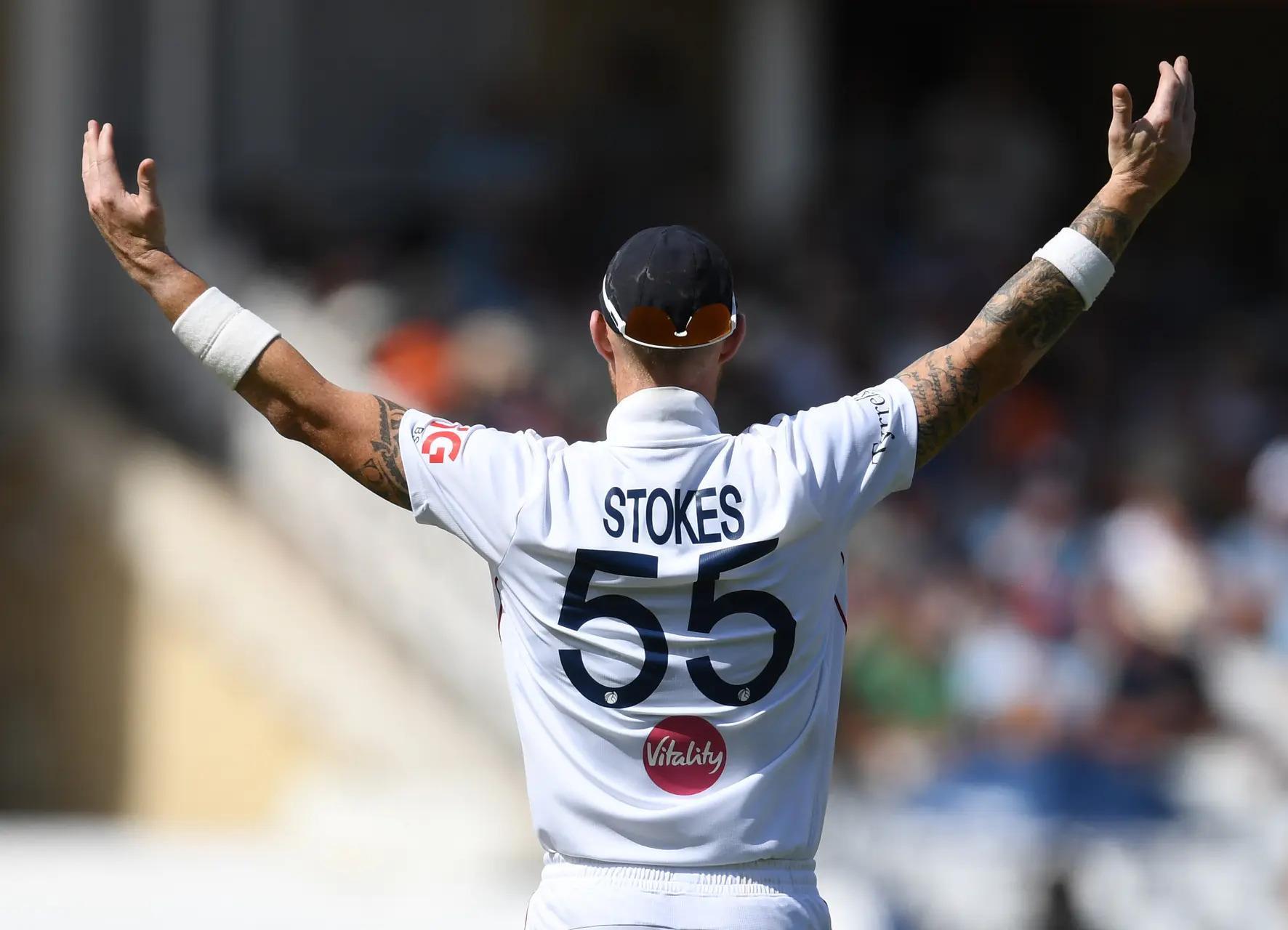
The way Ben Stokes chose to retire was particularly cruel. On the afternoon of the fourth day at Trent Bridge, with the Test still not over and tea time approaching, he announced that this would be his last game for England. Not at the end of a series, neatly wrapped in a guard of honor and orchestral montage, but in the middle of the story, the way he seems to play most of his cricket. Ek lamha ruk jao – wait a minute – the moment has passed.I spent a good portion of my adult life being told that Test cricket was dying, that five-day cricket was a colonial relic awaiting euthanasia by the attention economy. Then along came a left-handed man born in Christchurch and raised in Cumbria who decided almost single-handedly, and certainly single-mindedly, that patients were not going to go quietly. They named it Bazball after their coach, because the British always liked to name their revolutions after safe Antipodean people. Yet Stokes batted as if the scorecard was a personal affront, declaring when wise men would settle for survival, and he turned a dead rubber and a lost cause into the only cricket he seemed interested in.Of course, there’s Headingley in 2019, because there always has been. England were bowled out for 67 in the first innings, chasing 359 for 286 for 9, and had only Jack Leach, whose contribution amounted to moral support in the cricket world. What follows is less a competition than an argument about probability itself. Stokes won, because somehow Stokes usually wins. Leach’s solitary run has become one of the most famous in cricketing history, while at the other end a man seemed determined to convince mathematics that it had overestimated his own authority.
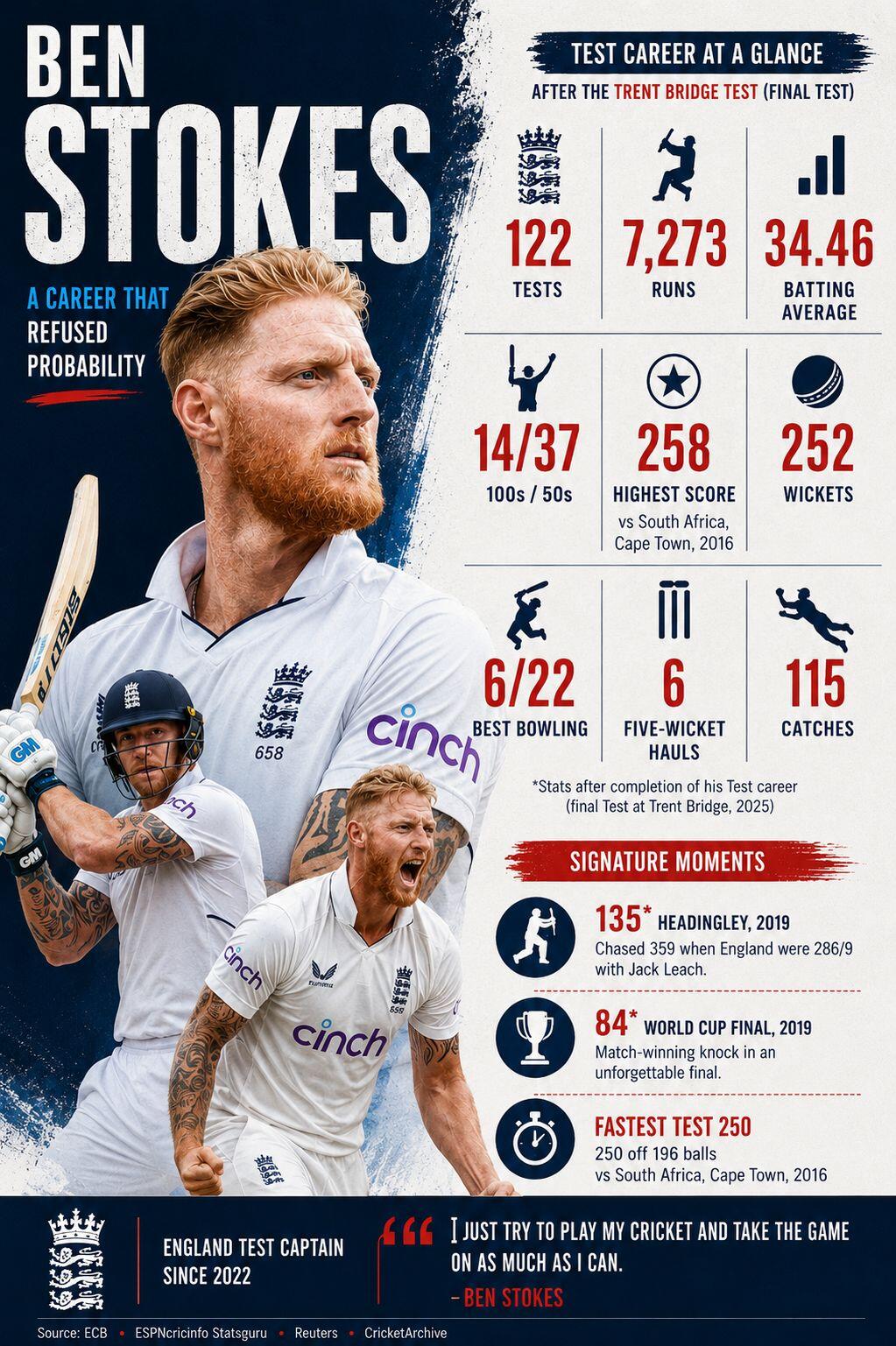
While these numbers are impressive, they feel a bit inadequate. Over 7,200 Test runs, over 240 wickets by the end of the final game, fourteen Test centuries, and a batting average that critics continue to wave as if it settled the debate. It solves nothing. Stokes has never been a middle-order guy. He belonged to Time, and Time had a habit of hating arithmetic. Cape Town’s 258 is the fastest 250 Test score ever and tells you more about him than any spreadsheet can. Averages are for actuaries. Stokes takes this to an extreme, in Tamasha, in the incredible stories grandparents tell children who politely pretend they have never heard them before.
What I keep coming back to, however, is that the first half of his career looks anything but biographical. Bristol, brawls, arrests, Ashes missing, being stripped of his vice-captain, and a reputation that seemed beyond repair. Kolkata’s Carlos Brathwaite put the ball into the stands four times in a row, and with them, every comforting assumption suggested that sporting redemption follows a straight line. For a while, Stokes became a cautionary tale in English cricket.He reconstructed himself in his own conscience, perhaps his greatest achievement. He speaks openly about mental health at a time when elite sport still treats vulnerability as a managerial mistake. He stepped away from the game indefinitely, while quietly allowing others to do the same. His captain’s body was often sustained by surgery, stubbornness and faith. These are the innings where highlights are rarely replayed.So he left, not at the end of a series, as was customary which would have preferred him, but in the middle of a Test match, tea was about to arrive and the result was yet to be decided. It was the most Ben Stokes-esque ending imaginable. For more than a decade, he played as if odds were just another opponent to tire out. Now he chooses to announce the ending before the game is over.Khuda Hafeez, Ben.There is always a scoreboard and statistics in the fourth inning. It might take longer to find another person willing to take both as mere suggestions.


































Post Comment