‘It’s not racist’: Egypt boss finally breaks silence on viral ‘X’ gesture, claims Messi was in tears Football News
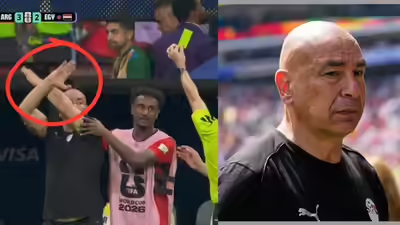
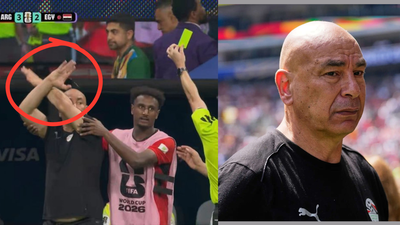
Egypt coach Hossam Hassan sparked widespread debate after he made the controversial “X” gesture during the dramatic 3-2 defeat to Argentina in the World Cup last 16. The moment, directed at referee François Letessier in stoppage time, quickly attracted attention because of its similarity to UEFA’s official anti-racism reporting protocol, which is used by players and staff to indicate discriminatory abuse. The gesture became one of the most high-profile incidents of the game, raising questions about its meaning and intent as tensions heightened following a chaotic finish and a series of controversial decisions.
Hassan said the gesture was directed at the referee and was not an accusation of racism
The crisis emerged in the final stages of Egypt’s last-16 knockout round, when Argentina staged a stunning comeback from two goals down.With emotions running high, TV cameras captured Hassan crossing his forearms in an “X” shape while expressing his displeasure to referee François Letessier. His twin brother and assistant coach Ibrahim Hassan immediately dropped his arm before the Egypt coach was shown a yellow card.Since the gesture has been used in professional football to report alleged racist abuse, including during Benfica’s Champions League meeting with Real Madrid earlier this year, it quickly sparked speculation about its intended meaning.However, Hassan firmly rejected this explanation when speaking after the game.“The gesture is not racist,” Hassan said. To quote The Sun.“I’m telling [the referee]’You’re not fair’. “
Hassan revealed that Lionel Messi
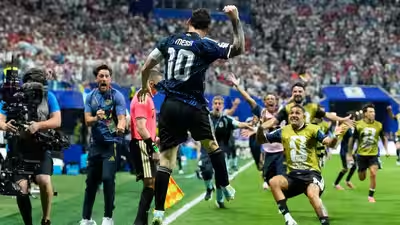
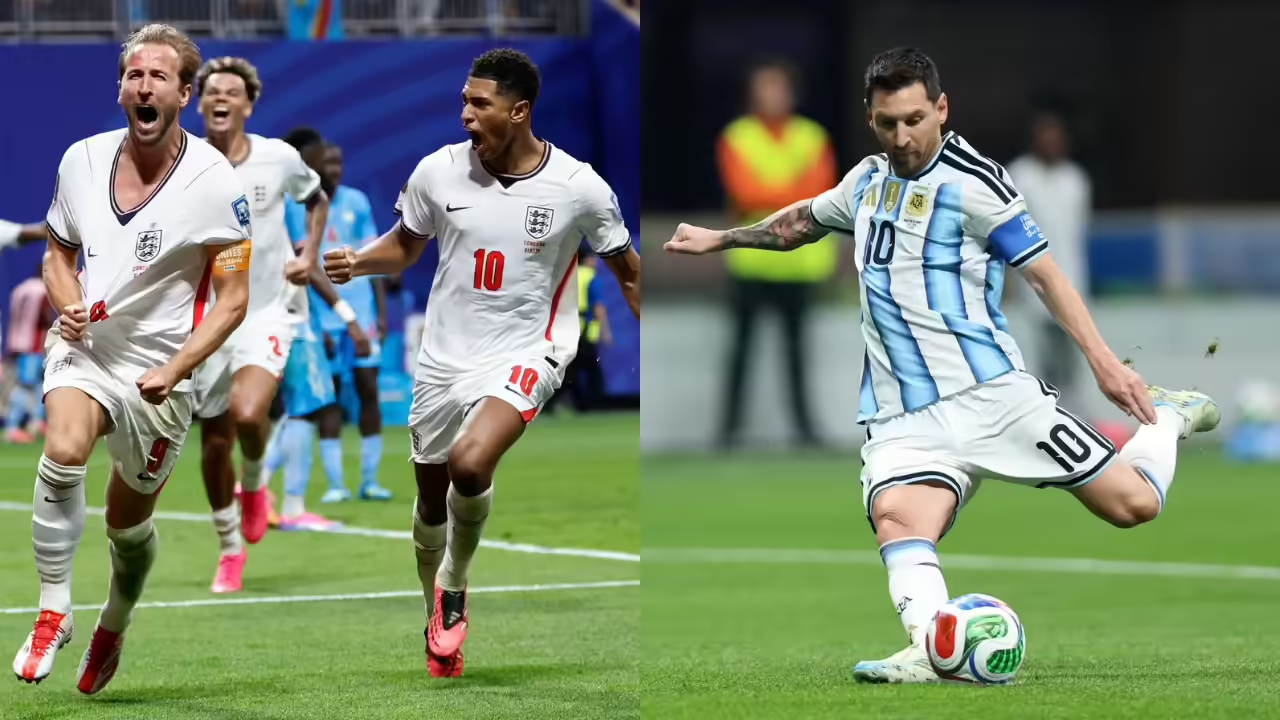
Hassan also revealed his confrontation with Messi in the final moments of the game.According to the Egypt coach, Messi questioned him immediately after the incident as tensions escalated on the touchline.“[Messi] He came up to me and said, “Why?” Why? Why? ‘I don’t know what else,” Hassan said.“It was one of the few times Messi had an argument during the game. He ended up crying because he was having a difficult time emotionally.“We’re a very tough team and we put them in a tough spot. Out of respect for his career, I tried not to respond to him and avoid any verbal friction between us.”In a thrilling match, Argentina overturned a 2-0 deficit in 13 frantic minutes to advance to the quarter-finals, with goals from Cristian Romero, Lionel Messi and Enzo Fernandez.
Egypt insist referees cost them game
Despite clarifying the meaning of his gesture, Hassan did not soften his criticism of the referee.Egypt felt they were robbed of several key decisions in the game, including disallowing Mustafa Chico’s goal and what they believed was an unpunished foul on Mustafa Chico. Mohamed Salah Get ready for Enzo Fernández’s dramatic victory.Immediately after the defeat, Hassan said outside pressure influenced officials.“We didn’t see respect or fair play,” he said.“The Argentinian side seemed to have put pressure on the referee which led to this result.“Life isn’t fair. The world isn’t fair. Okay, but why shouldn’t there be fairness in sports?“I’m not happy with the result and the way things went in this game.“The referee was unfair and God was enough for me and was the best handler.“He wasted the efforts of the whole country. The trophy is for Argentina.”The Egyptian Football Association later issued a strongly worded statement calling on FIFA to investigate the “blatant errors” by the refereeing team and demanding that referee Letexir and his team be removed from the remaining matches.
FIFA responds as disciplinary uncertainty remains
The accusations prompted FIFA to respond through chief referee Pierluigi Collina, who defended the referee’s impartiality and dismissed claims that Argentina was receiving preferential treatment.While Hassan has yet to be disciplined for his sideline behavior or post-match comments, the matter is not yet completely over.according to athletics, FIFA intends to review potential disciplinary cases after the World Cup, using the same approach as after the 2022 World Cup.Hassan and Egypt forward Mustafa Chico could still face sanctions for comments deemed to bring the game into disrepute, while other figures including Swiss defender Manuel Akanji and England manager Thomas Tuchel have also publicly criticized refereeing standards during the game.Hassan’s latest explanation, however, removes one aspect of the controversy. While Egypt continues to take issue with the refereeing of the heartbreaking knockout clash, the veteran coach insists the gesture, which sparked worldwide debate, was in no way an accusation of racism but a protest against what he sees as an unfair performance by referees.

























Post Comment